Why the Foyer Changes the Pace of a Cinema Visit
A cinema foyer makes arrival easier by helping you find your room, handle small needs, and enter the auditorium without a last-minute scramble.
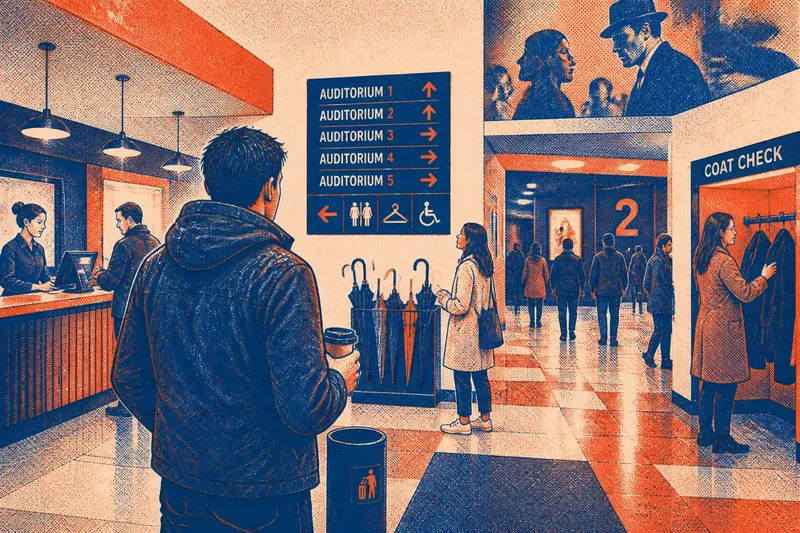
You arrive at the cinema with rain on your coat and a message still open on your phone. The ticket line is moving, a friend is looking for the auditorium number, and someone has left an umbrella beside the door. A cinema foyer is where these small logistics meet the building’s shared rules.
Its value is less about creating ceremony than preventing avoidable friction. Read the signs, deal with belongings, and keep paths clear before entering the auditorium. What happens in the foyer can make the rest of the visit simpler for you and for the people arriving beside you.
The foyer handles the practical business of arrival
Start with the obvious landmarks: ticket desk, auditorium signs, restrooms, coat area, and exit route. If the venue posts room assignments on a board, check it rather than assuming a screen number is also the auditorium number. Cinemas have a quiet talent for making two unrelated numbers look like one.
Take care of small needs before you enter the screening room. Visit the restroom, dispose of a cup, or decide where a bulky coat will go. If you are meeting someone, choose a spot that does not obstruct the entrance, queue, or route to the auditoriums.
Say you arrive for a film with a takeaway cup, a wet umbrella, and a coat you do not want on your lap. You check the auditorium board, put the umbrella where the venue permits, throw away the cup, and use the coat area if one is available. The resulting decision is clear: you can go to your seat without carrying the cup or searching for the room in the dark; if there is no coat area, keep the coat with you and choose a seat arrangement that leaves the aisle clear.
Clear routes matter more than elaborate decor
A vestibule, a change in flooring, or a turn away from the street can make the entrance easier to read. In a compact cinema, the ticket desk may be only a few steps from the door. The useful question is whether people can tell where to queue, wait, and proceed without blocking one another.
Keep doorways and aisles open, and make room for people using mobility aids. Follow the venue’s directions about queues and accessible routes rather than assuming the shortest path is the right one. A foyer that looks grand but leaves no clear passage is still a foyer with a problem.
- Check whether the auditorium number is posted; if it is, follow that sign, and if it is not, ask staff before joining a queue.
- Check whether the ticket line reaches the entrance; if it does, wait along the marked route, and if it does not, stand clear of the doorway.
- Check whether an umbrella stand or wet-weather area is provided; if it is, use it, and if it is not, keep the umbrella contained and away from the main path.
- Check whether a coat area is open; if it is, use it for a bulky coat, and if it is not, take the coat into the auditorium without spreading it across a neighboring seat.
- Check whether a restroom is available before the auditorium doors; if it is, use it before taking your seat, and if it is not, ask staff where the nearest one is.
- Check whether your waiting spot blocks a sign, door, or accessible route; if it does, move to an open area, and if it does not, wait there without joining a queue prematurely.
Make the move into the auditorium orderly
When the doors open, find your row and seat using the signs or aisle lights. Let seated viewers move their legs or pass bags before you cross in front of them. Settle your coat, drink, and phone while the room is still lit enough to do so without turning a small adjustment into a search party.
The auditorium has different expectations from the foyer. Keep conversation low, silence your phone, and avoid stopping in the entrance while deciding where to go. If you need more time or assistance, ask an usher rather than trying to solve a crowded aisle alone.
What should you sort out before taking your seat?
How early should I arrive at the cinema?
Allow enough time to find the auditorium, handle any restroom visit, and take your seat without rushing. The margin depends on the venue, the queue, and how much time you need to move through the building.
Should I wait in the foyer or go straight to my seat?
Go in when the auditorium is open and you are ready to settle. Finish conversations and put away belongings somewhere that does not obstruct the entrance or queue.
What should I do if the foyer is crowded?
Move away from doorways and ticket lines, then read the posted signs or ask staff for directions. If the space is too busy to stop, keep your phone silent and proceed without blocking other viewers.
Does a small cinema need a grand foyer?
No. Clear signs, usable paths, and a sensible place to wait can make a small entrance work well. Marble is not required to identify a door.
Let the room set the terms of the visit
Once seated, put your phone out of sight and finish any last adjustments quietly. If you are with friends, save the running commentary for after the screening; a shared room does not make every reaction a public announcement.
A cinema foyer is useful when it makes the next decision obvious: where to go, what to carry, and how to leave the route open for others. On your next visit, notice whether the signs, queue, and waiting area help answer those questions. That is a more practical measure of a foyer than its staircase.