A Home Screening Built Around One Lasting Scene
Plan a home screening around one lasting scene, with a clear film choice, comfortable setup, and a relaxed conversation that does not feel like homework.
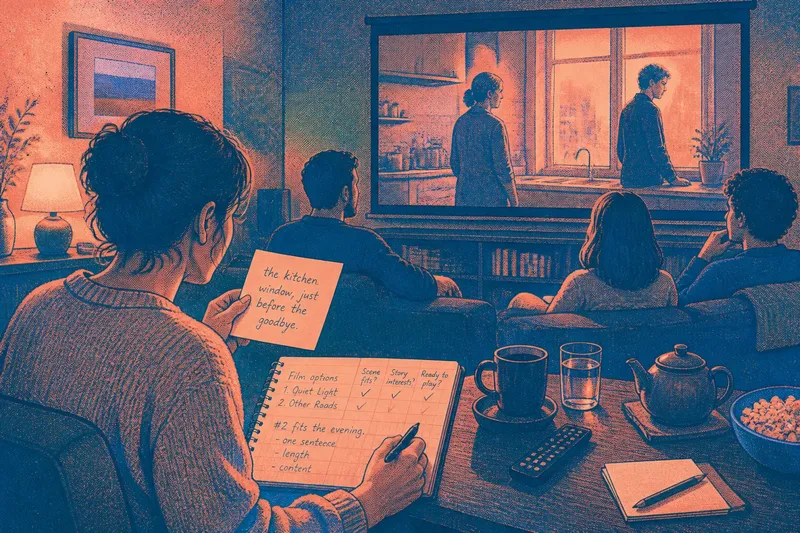
A rainy Thursday leaves Mara clearing mail from the coffee table when she finds an old note: “the kitchen window, just before the goodbye.” She wants to show the film to two friends, not deliver a lecture. A home screening built around one lasting scene gives her a reason to choose a film and a simple way to share it.
This is an invented situation. The scene is a prompt, not an assignment: the film should make sense as a whole even for guests who have never heard Mara’s story.
Start with the detail you remember
Mara begins with the note rather than a streaming menu. She recalls two people in a kitchen, one looking toward a window, and a farewell that may be spoken or merely understood. She writes down those details, then marks what she is unsure about. Memory can preserve a feeling and misplace a coat.
She checks her viewing notes and asks the friend who first watched the film with her. Once she has a likely title, she confirms the film is available to play in full. She does not need to verify every remembered gesture before inviting anyone.
A memorable scene can suggest a film’s texture, but it cannot promise the whole film will suit the group. A farewell in a kitchen might belong to a quiet drama or a stranger story. Mara chooses a title she can introduce without explaining the scene, then checks that its length and content fit the evening.
Choose a film that works beyond the scene
Mara keeps two possible titles in mind and compares them on three points:
- If the remembered moment fits the film, keep it on the list; if not, check another title rather than forcing the match.
- If the surrounding story interests the guests, keep the candidate; if not, choose a film she can describe in one clear sentence.
- If the full film is ready to play from an available source, use that version; if not, settle access before inviting people or choose another title.
- If the selected edition is clear, note it for the evening; if the platform offers confusing cuts, verify the title and version before guests arrive.
- If the film’s length and content suit the group, proceed; if either is a poor fit, choose a different film or tell guests what to expect.
- If a short clip would identify the scene, use it only if confirming the title matters more than preserving the first viewing; otherwise, rely on notes or a friend’s memory.
Say Mara has two plausible films. One contains the exact kitchen farewell she remembers, but its setup is likely to frustrate her tired guests. The other has a quieter goodbye and a story she can introduce in one sentence. She chooses the second, confirms it is ready to play, and sends: “I’d like to show you a film because a quiet goodbye by a kitchen window stayed with me. We’ll watch the whole thing, then talk if we feel like it.” The expected result is a clear invitation without homework.
She does not announce when the scene is coming. The film can establish its own pace, and the scene may differ from her recollection. That difference is part of watching it again, not a problem to correct during playback.
Prepare the room without staging a ceremony
Mara clears the mail, puts the remote where anyone can see it, and checks that each guest has a comfortable view. A lamp remains on at the edge of the room so people can find a glass without brightening the screen area.
Before guests arrive, she starts the film briefly to check the audio track, captions, and playback source. She keeps dialogue clear and makes captions available without turning them into an announcement. Water and tea are ready; noisy snacks stay away from the speakers.
She skips printed scene notes and discussion questions. A blank card and pencil sit nearby for anyone who wants them, but no one is expected to write. If a guest may arrive late, Mara leaves a seat that can be reached without crossing in front of the screen.
One practical point: know how to resume playback before anyone needs to ask.
Let the film run at its own pace
When everyone has settled, Mara gives a short introduction: the title and why she chose it. She asks guests to silence phones if that feels comfortable, then starts the film.
She lets it run unless someone needs a break or playback fails. If the group pauses, they agree where to resume; nobody rewinds the remembered scene for inspection. Side conversations can wait until afterward, though the host need not police every quiet reaction.
If the film calls for a break, Mara mentions the plan before pressing play. A pause for food or a moment away from the screen is ordinary, not a breach of cinematic law. Guests may respond differently to the scene. One might laugh at a line Mara remembers as sad; another may notice that the person at the window is watching the room. She listens without settling which response is correct.
Talk about the film without making it an exam
When the credits begin, Mara lets the room sit for a moment. Then she asks, “I remembered the kitchen window most clearly. What stayed with you?” Guests can name that scene, a sound, a gesture, or an entirely different moment.
If conversation slows, she asks what happened just before the farewell or how it changed the characters’ choices. Those questions connect the scene to the film without demanding a single interpretation. She avoids asking anyone to defend a reaction; “Was there a part that didn’t land for you?” leaves room for taste and mood.
Some guests may prefer tea or a quick departure. That is fine. A conversation is an option, not the entrance fee for the evening.
What should you do if the memory is uncertain?
Should you identify the film before inviting guests?
Try to confirm the title through viewing notes or a friend who saw it with you. If uncertainty remains, describe the scene as you remember it and choose a film that works even if one detail is wrong.
Should you show the scene before the full film?
Use a clip only when identifying the title matters more than seeing the moment fresh together. Otherwise, keep the scene as a loose clue and let the full film reveal what it contains.
What if the scene feels different on the night?
Let the difference stand. Guests may notice details you missed, and you do not need to correct their impressions or explain your own.
What if nobody wants to discuss the film?
Skip the conversation and offer tea, a quiet minute, or a simple goodbye. The screening can still be a good evening without a group verdict.
Keep a small record of what the room noticed
Before guests leave, Mara offers the blank card to anyone who wants to add a word or phrase. One friend writes “light on the glass,” another adds a character’s name, and Mara writes “pause before the goodbye.” She keeps the card inside a book or sends a photo to the group.
The record does not need to explain the film. A few details can bring back the screening more clearly than a polished account of its themes. Mara also notes the edition she played and whether the room felt too bright, practical reminders for another evening.
For a home screening built around one lasting scene, the useful record is the one that makes the next conversation easier to remember. A title, a handful of specific details, and the guests’ different impressions are enough; the film can take care of the rest.