Printed Programme or Wall Poster: Two Ways to Meet a Film
Printed programme or wall poster: choose the format that fits your time and purpose, from checking screening details to starting a conversation before the lights dim.

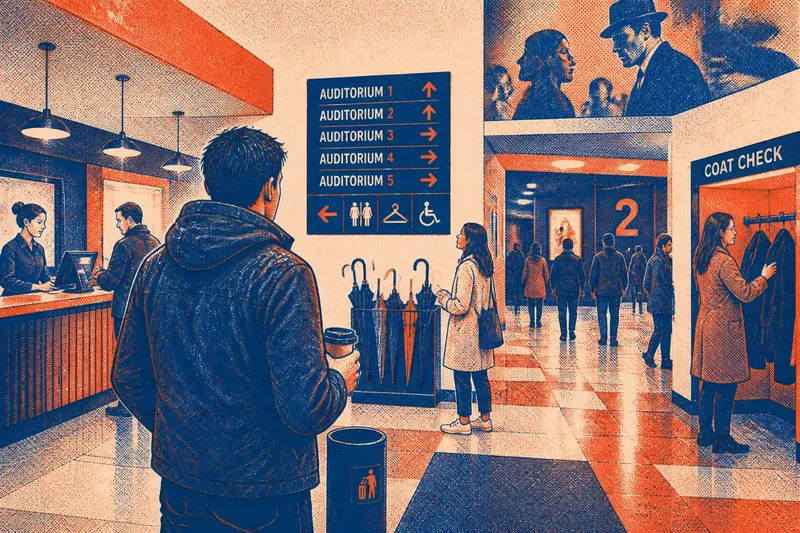
You have a few minutes before the lights dim. A folded programme sits beside the ticket desk; across the lobby, a poster gives the film one large, silent face. Choosing a printed programme or wall poster comes down to what you need before the screening: usable information, a prompt for conversation, or simply something to look at while you wait.
Use a programme to check screening details
A printed programme is useful when the screening has details that could affect your plans. It may list the order of a double feature, identify a restored version, name an accompanying short, or explain a change to the advertised schedule. Read those details before you settle in, especially if you need to know what is actually being shown.
Programmes also provide credits and context in a compact form. If you are trying to identify a director, performer, or cinematographer, the page is more dependable than guessing from a face on a poster. A director’s note can offer background, though it is still one person’s framing of the film, not an instruction sheet for how to watch it.
The trade-off is attention. Reading closely can pull you out of a conversation or make you miss a practical announcement. Pick up the programme when its information answers a real question; there is no need to study every paragraph like an entrance exam.
Check the schedule first if timing or the screening version matters to you.
Use a poster to start a conversation
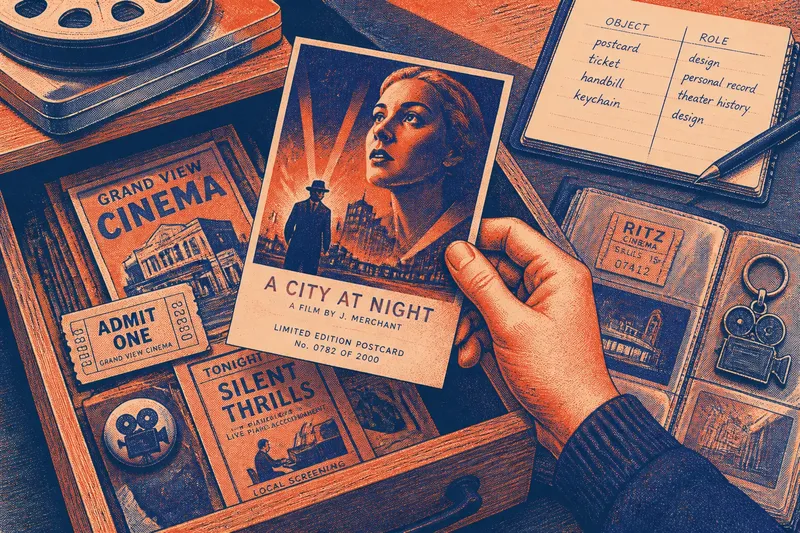
A wall poster is easy to share. Its title, composition, color, and central image give people something to notice together without passing a page around. You might disagree about whether the design looks comic or ominous, which is a perfectly respectable use of a lobby.
That makes a poster useful while meeting friends or deciding whether a film’s presentation catches your attention. It can suggest a tone, but it cannot reliably tell you the plot, screening order, or what has been changed for a special presentation. Promotional art is designed to attract a glance, not to serve as a complete program note.
If the image interests you, use it to begin a conversation, then check the programme or venue listing for facts that matter to your plans.
Choose according to the job at hand
- If you need to know which film plays first, check the programme; if the order is missing, ask the box office before taking your seat.
- If you want to confirm whether a specific version is screening, look for a version note in the programme; if none appears, ask venue staff rather than infer it from the poster.
- If you are meeting someone and want an easy shared prompt, look at the poster together; if the image gives you little to discuss, use the time to check the schedule instead.
- If you want to identify a crew member, consult the printed credits; if the name is not listed, check the venue’s official listing later rather than guess.
- If you have only a brief wait and both hands are occupied, glance at the wall poster; if you need detailed information, put down what you are carrying and read the programme when convenient.
- If you are deciding whether to stay for a second feature, check its title and timing in the programme; if those details are unclear, ask staff before committing.
Imagine you arrive with a friend for a double feature and have not decided whether to stay for the second film. The poster draws your attention, but it does not settle the question. You open the programme, confirm the second title and order, then decide together that its stated format is not what either of you wants to see that evening. The poster started the conversation; the schedule details helped you make the decision.
Keep only what has a use for you
A programme may be worth taking home if you want to retain a credit, screening note, or schedule detail. If you only needed to check the order before entering the auditorium, leaving it behind is reasonable. A poster is usually part of the venue’s display, so admire it there rather than treating the wall as a stationery counter.
For a printed programme or wall poster, the practical distinction is what each lets you do in the moment: verify screening information or share an immediate response to the film’s public image. Check the programme for decisions that depend on facts, and use the poster when a glance or a conversation is enough.
Which format answers your question?
What should I choose if I am new to the film?
Look at the poster if you want to see how the film is being presented. Read the programme if you want screening context, credits, or information about accompanying material.
Which is better when I am deciding whether to attend?
The poster can attract your attention, but the programme or venue listing is more useful for checking the schedule and any listed screening details. If the information you need is absent, ask the venue rather than treating promotional art as a timetable.
What should I keep after the screening?
Keep the programme if it contains a detail you expect to consult again. If it served only to settle a question before the film, you can leave it behind.
Can I use both without overthinking it?
Yes. Look at the poster, then check the programme only for details that affect your plans or curiosity.